Senior Cats Losing Weight: Should You Increase or Reduce Protein?
Many cat owners notice that as their cats grow older, they gradually become thinner—even when they seem to be eating normally. This often raises an important question:
“Should senior cats eat less protein as they age?”
Surprisingly, for most healthy senior cats, the answer is no.
Weight Loss Is Common in Older Cats
As cats age, they naturally begin to lose muscle mass, a condition known as sarcopenia. Even if body weight appears relatively stable, lean muscle tissue may be gradually declining.
At the same time, older cats become less efficient at digesting and utilizing protein. As a result, they often require more high-quality protein to maintain muscle mass, immune function, and overall health.
This is why many cats over the age of 12 may appear thinner, with more prominent bones along the spine or hips.
Most Senior Cats Actually Need More Protein
Unless a cat has a specific medical condition, age alone is not a reason to restrict protein.
In fact, veterinary nutrition experts generally agree that healthy senior cats benefit from diets containing adequate amounts of highly digestible, high-quality animal protein.
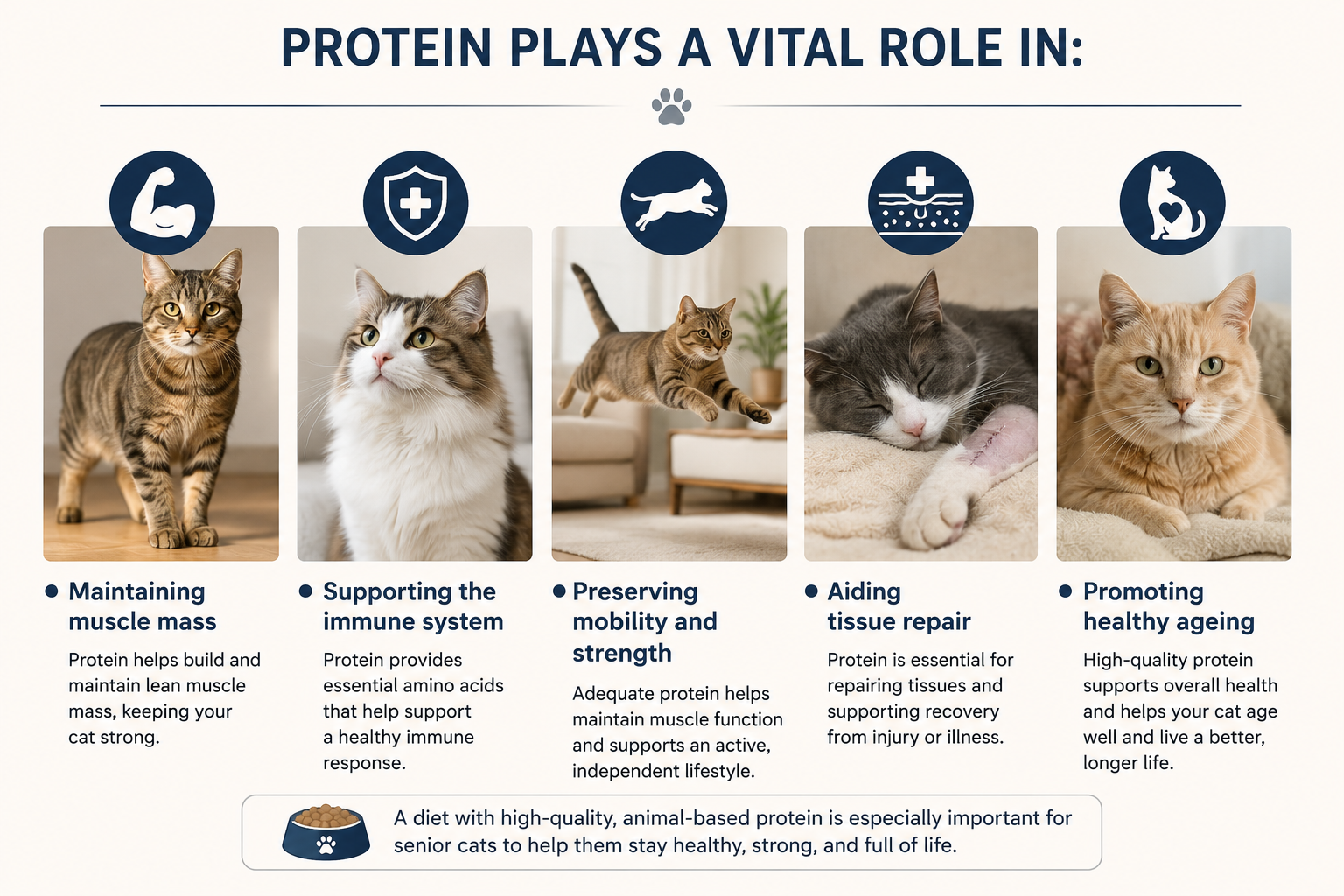
Protein plays a vital role in:
- Maintaining muscle mass
- Supporting the immune system
- Preserving mobility and strength
- Aiding tissue repair
- Promoting healthy ageing
Animal-based proteins, such as chicken, turkey, fish, and eggs, are particularly valuable because they are more biologically appropriate for cats.
Why Was Low-Protein Feeding Recommended in the Past?
For many years, people believed that reducing protein intake could help “protect the kidneys.” Consequently, many owners automatically switched their ageing cats to lower-protein diets.
However, current research suggests that:
Healthy senior cats do not require protein restriction simply because they are getting older.
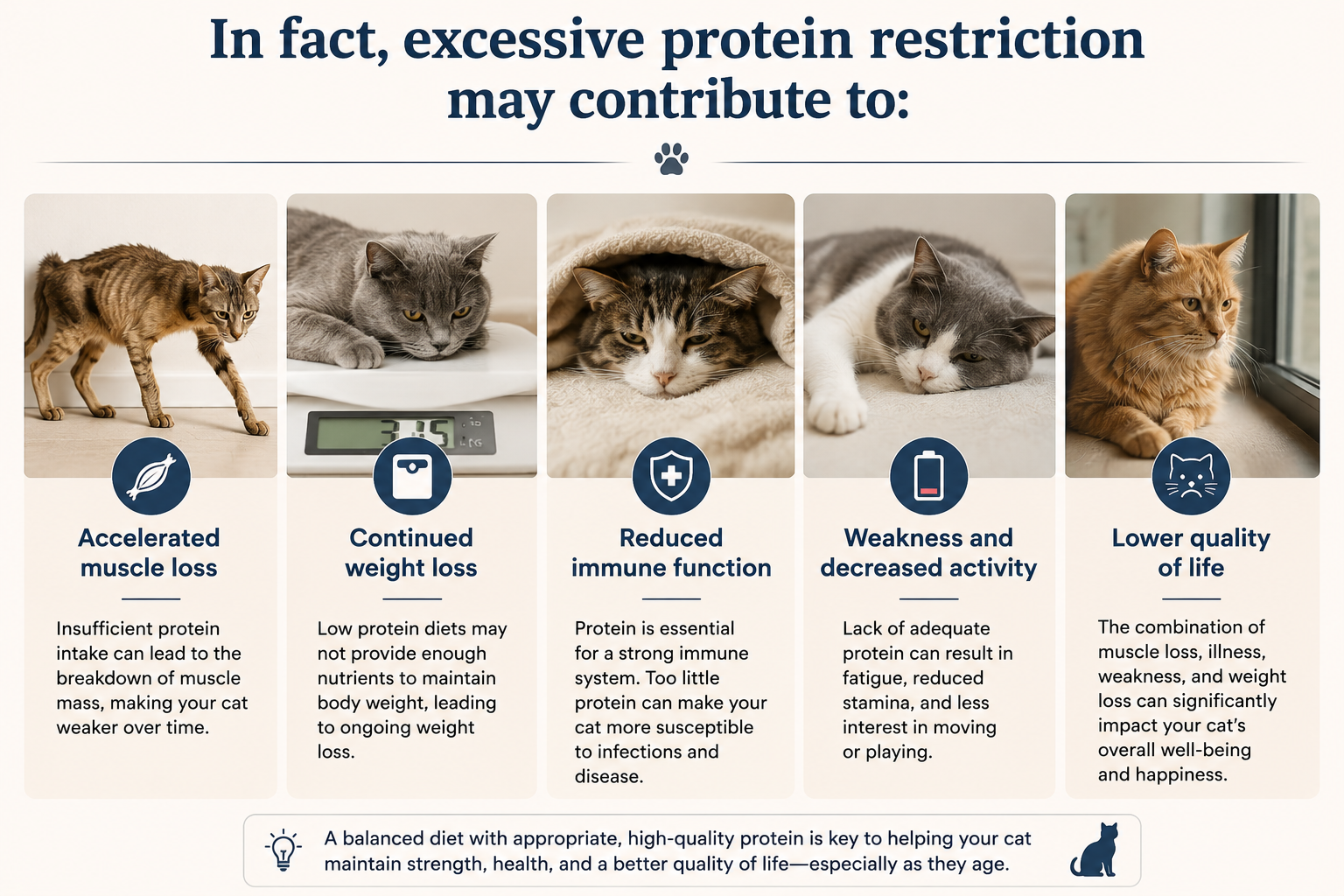
In fact, excessive protein restriction may contribute to:
- Accelerated muscle loss
- Continued weight loss
- Reduced immune function
- Weakness and decreased activity
- Lower quality of life
Growing older does not necessarily mean needing less protein.
When Should Protein Be Restricted?
Not every senior cat should consume a high-protein diet.
Cats diagnosed with conditions such as:
- Chronic kidney disease (CKD)
- Liver disease
- Certain urinary tract disorders
may require dietary modifications based on their individual medical needs.
Even in cats with chronic kidney disease, the goal is not to eliminate protein altogether. Modern renal diets focus on:
- Providing moderate amounts of highly digestible protein
- Restricting phosphorus
- Increasing omega-3 fatty acids
- Maintaining adequate calorie intake and hydration
The aim is to slow disease progression while preventing malnutrition.
Final Thoughts
Many owners believe that older cats should automatically consume less protein. In reality, most healthy senior cats require the opposite.
Ageing does not mean needing less protein—it often means needing better-quality protein.
The key is not whether a diet is “high protein” or “low protein,” but whether it is appropriate for your cat’s individual health status.
If your senior cat is losing weight, even with a normal appetite, it is important to consult your veterinarian. Weight loss should never be dismissed as “just getting old,” as it may be the first sign of an underlying medical condition.