Why Is My Cat Drinking More Water Than Usual?

You might not notice the first time your cat takes an extra drink. But when the water bowl starts emptying faster, or your cat suddenly spends more time at the tap, it can be hard not to wonder what’s changed.
Drinking more water isn’t always a sign of illness. Sometimes, the explanation is as simple as a change in diet or warmer weather.
But increased thirst can also be one of the earliest noticeable signs that something inside your cat’s body is changing.
The important question isn’t simply how much your cat drinks. It’s why their drinking habits have changed.
How Much Water Does a Cat Actually Need?
Cats get water from two main sources: the water they drink and the moisture in their food.
This makes their drinking habits quite different depending on what they eat.
Wet cat food can contain around 70–80% moisture, while dry food contains much less. A cat eating mostly wet food may therefore visit its water bowl less frequently than a cat eating dry food.
That doesn’t necessarily mean one cat is better hydrated than the other.
A cat’s total water intake depends on several factors, including:
- Diet and food moisture
- Body size
- Activity level
- Environmental temperature
- Individual health and metabolism
The amount your cat drinks from its bowl is only part of the hydration picture.
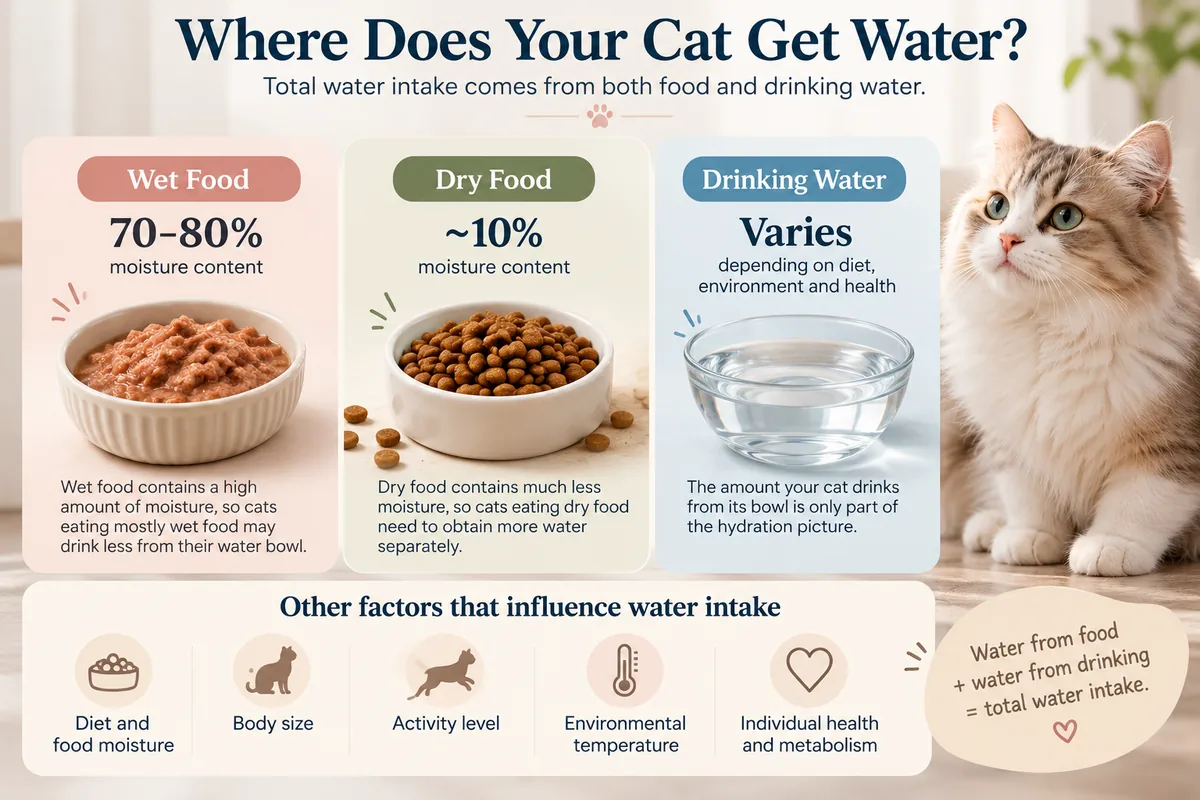
Less drinking from the bowl does not automatically mean less total water intake.
Why Might Your Cat Suddenly Drink More Water?
1. A Change in Diet
If you’ve recently switched your cat from wet food to dry food, you may notice them drinking more.
This is because dry food provides much less moisture, so your cat needs to obtain more water separately.
In this situation, increased drinking may simply reflect a change in where your cat gets its water.
2. Warmer Weather or Increased Activity
Cats may drink more when temperatures rise or when they lose more water through activity.
A temporary increase in thirst can be a normal response to changes in their environment.
However, a noticeable increase that continues without an obvious explanation deserves attention.
3. Kidney Disease
The kidneys help regulate the body’s water balance by filtering blood and adjusting how much water is lost through urine.
When kidney function becomes impaired, a cat may lose more water through urine because the kidneys cannot concentrate it as effectively.
To compensate, the cat may begin drinking more.
This is one reason increased thirst and urination are important changes to watch for, particularly in older cats.
4. Diabetes Mellitus
Diabetes can also cause increased thirst.
When blood glucose becomes too high, glucose may enter the urine and draw additional water with it.
As the cat loses more fluid through urination, it becomes thirstier.
Some cats with diabetes also experience weight loss despite maintaining a good or increased appetite.
5. Hyperthyroidism
Hyperthyroidism occurs when the thyroid gland produces excessive thyroid hormones.
It is more common in middle-aged and older cats and can affect metabolism throughout the body.
Possible signs include increased thirst, weight loss, increased appetite, restlessness and changes in activity.
These signs can overlap with other conditions, which is why drinking habits alone cannot identify the cause.
What Other Changes Should You Look For?
Increased thirst becomes more informative when you consider what else has changed.
Pay attention to:
- Urination: Is your cat producing larger urine clumps or using the litter box more frequently?
- Weight: Has your cat lost weight without an obvious reason?
- Appetite: Is your cat eating more or less than usual?
- Energy: Have you noticed unusual tiredness, weakness or restlessness?
- Behaviour: Is your cat suddenly seeking water from taps, sinks or other unusual places?
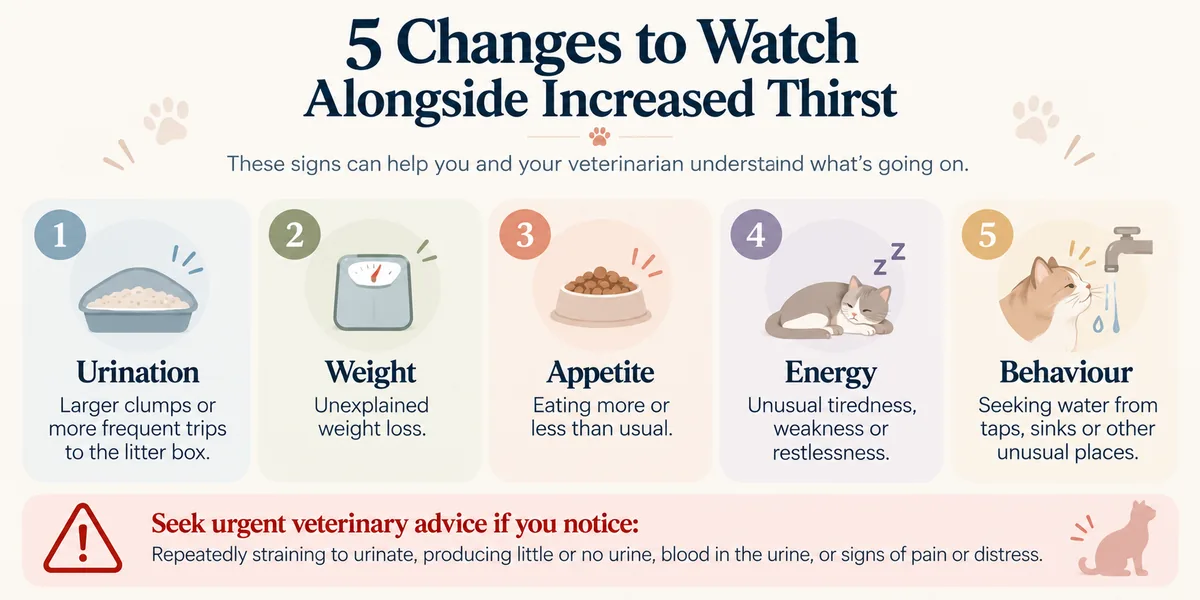
These observations don’t provide a diagnosis, but they can help your veterinarian understand the pattern.
One important distinction is whether your cat is producing larger amounts of urine or repeatedly trying to urinate only small amounts. The second pattern may indicate a different urinary problem.
How Can You Track Your Cat’s Water Intake at Home?
If you’ve noticed a change, a simple record can make the pattern easier to understand.
Start by measuring how much water you put into your cat’s bowl over 24 hours. Record any additional water you add, then subtract what remains.
Try to keep track of the following information:
- Water intake: Approximate amount consumed over 24 hours
- Food: Wet food, dry food or a combination
- Urination: Changes in litter clump size or frequency
- Appetite: Eating normally, more or less
- Weight: Any recent unexplained change
- Other signs: Vomiting, tiredness or behavioural changes
Remember that water from food isn’t included in bowl measurements, and shared bowls or outdoor water sources can make accurate tracking difficult.
You don’t need perfect numbers to notice a meaningful change. A consistent record of what is normal for your cat can still be useful.
Never restrict your cat’s access to water to test whether they are drinking too much.
When Should You Contact a Veterinarian?
If your cat is drinking or urinating noticeably more than usual without a clear explanation, arrange a veterinary appointment.
Seek prompt veterinary advice if increased thirst occurs alongside weight loss, vomiting, weakness, poor appetite or significant changes in urination.
If your cat repeatedly strains to urinate, produces little or no urine, or appears distressed while trying to urinate, seek emergency veterinary care. A urinary blockage can be life-threatening.
A veterinarian may recommend blood tests and urine tests to investigate the underlying cause.
Final Thoughts
A cat drinking more water doesn’t automatically mean something is wrong.
But it also shouldn’t always be dismissed as a harmless habit.
The most useful clue is often the change itself: a water bowl that empties faster, larger litter clumps or a new pattern that wasn’t there before.
Understanding your cat’s health begins with knowing what’s normal for them, and recognising when that normal starts to change.
PAW PROMISE — A promise to every paw. Every day.
This article is for educational purposes and does not replace veterinary advice.
References
- Cornell Feline Health Center — Hydration
- PDSA — Is My Cat Drinking and Weeing Too Much?
- Cornell Feline Health Center — Feline Diabetes
- Cornell Feline Health Center — Hyperthyroidism in Cats