Is Your Cat Really Overweight, or Just Fluffy?

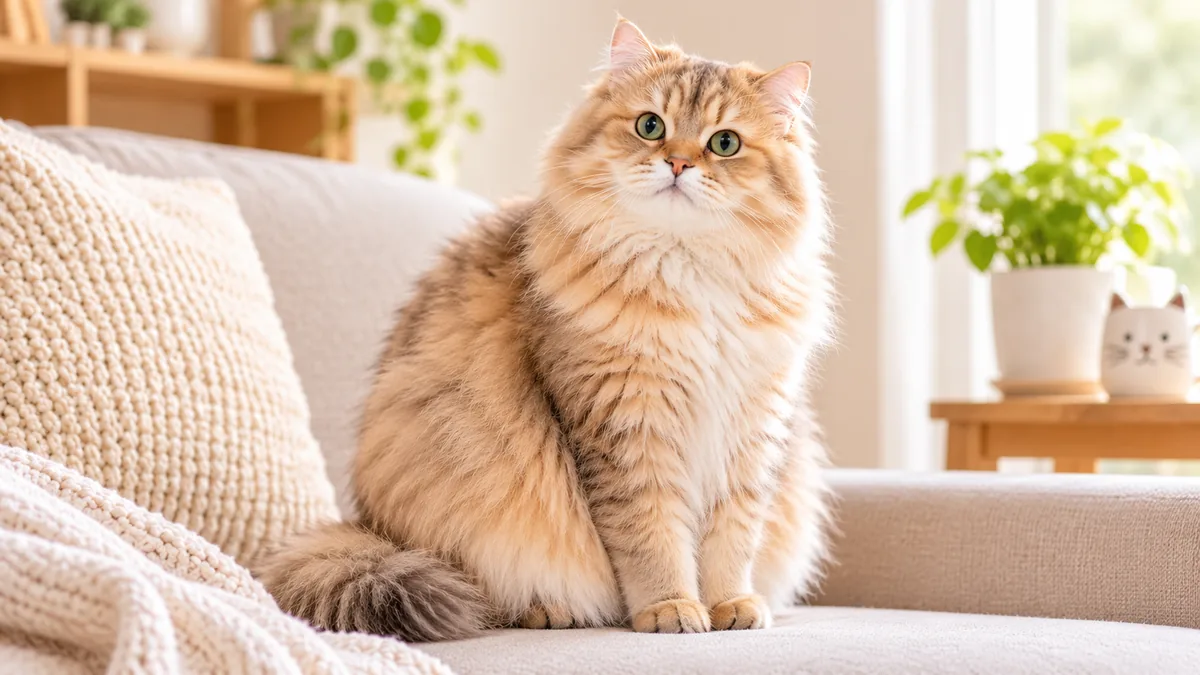
Your cat looks like a little round ball of fur when sitting on the sofa. Friends call them chubby, and every photograph seems to make them look even bigger.
But when you run your hands along their sides, you can feel their ribs surprisingly easily.
So is your cat actually overweight, or is all that fluff creating an illusion?
The answer isn’t always obvious from appearance alone.
Long fur, natural body shape and even the way a cat sits can make them look heavier than they really are. Meanwhile, some cats with short coats can carry excess body fat without looking particularly round.
The important question isn’t how big your cat looks. It’s how much body fat they’re carrying.
Why Can a Fluffy Cat Look Overweight?
A cat’s coat can dramatically change its silhouette.
Long-haired breeds often have thick fur around the chest, belly, legs and tail. This extra volume can make the body appear wider or rounder than it actually is.
Seasonal coat changes can also influence appearance, especially in cats that develop a thicker undercoat during colder months.
Posture matters too.
When a cat sits with its legs tucked underneath its body, its belly and sides may appear more rounded. When the same cat stands and stretches, its waist may become easier to see.
This is why photographs alone are not a reliable way to judge body condition.
Fur changes how a cat looks. Body fat changes what you feel underneath.
Can a Cat Look Slim but Still Be Overweight?
Yes.
Not all excess body fat creates an obviously round appearance.
Some cats carry more fat around the abdomen or over the ribs without developing a dramatically wider silhouette.
Others may have relatively little muscle, which can make their overall body shape harder to interpret.
This is one reason body weight and visual appearance should not be used as the only indicators of healthy body condition.
A cat’s ideal weight also depends on its frame size, breed, age and individual build.
Two cats can weigh exactly the same but have very different body conditions.
What Is Body Condition Score (BCS)?
Body Condition Score, or BCS, is a practical system used by veterinarians to estimate a cat’s body fat reserves.
One commonly used method is a nine-point scale.
A score of 1 represents an extremely thin cat, while a score of 9 indicates severe obesity.
For many adult cats, a score of approximately 5 out of 9 is considered ideal.
However, BCS is not simply a number assigned by looking at a cat.
It combines visual observation with physical examination, particularly around the ribs, waist and abdomen.
A cat’s BCS can provide useful information about whether they are underweight, at an appropriate body condition or carrying excess fat.
How Can You Check Your Cat’s Body Condition at Home?
You can begin with three simple observations.
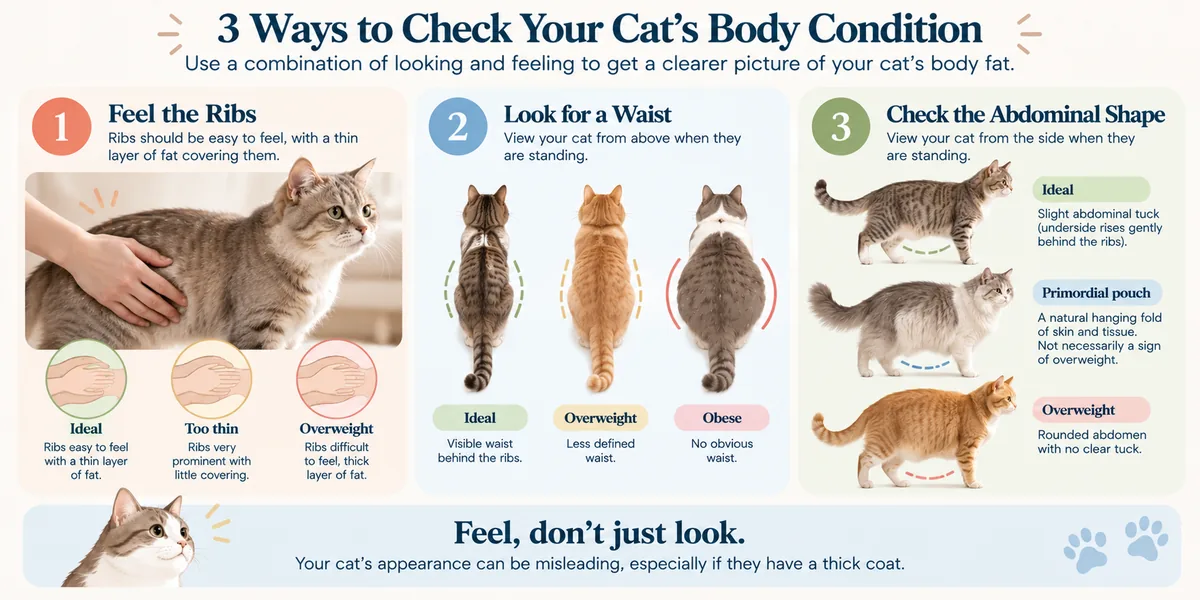
1. Feel the Ribs
Gently run your fingers along both sides of your cat’s chest.
In a cat with an ideal body condition, the ribs should usually be easy to feel beneath a thin layer of fat, without pressing firmly.
If the ribs are very prominent with little covering, the cat may be too thin.
If you need to press hard to locate the ribs, the cat may be carrying excess body fat.
Long fur can make visual assessment difficult, but it generally doesn’t prevent you from feeling the underlying ribcage.
2. Look for a Waist
Stand above your cat while they are standing naturally.
Many cats at an appropriate body condition have a visible waist behind the ribs.
The waist doesn’t need to be dramatically narrow.
What matters is whether the body gently curves inward rather than remaining uniformly rounded.
For long-haired cats, you may need to smooth the fur down or rely more on touch.
3. Check the Abdominal Shape
Look at your cat from the side.
A cat with an ideal body condition often has a slight abdominal tuck, meaning the underside of the body rises gently behind the ribcage.
An excessively rounded abdomen may suggest additional fat, but abdominal shape alone cannot confirm obesity.
Some cats also have a naturally hanging fold of skin and tissue called the primordial pouch.
This pouch is not automatically a sign that your cat is overweight.
What Is a Primordial Pouch?
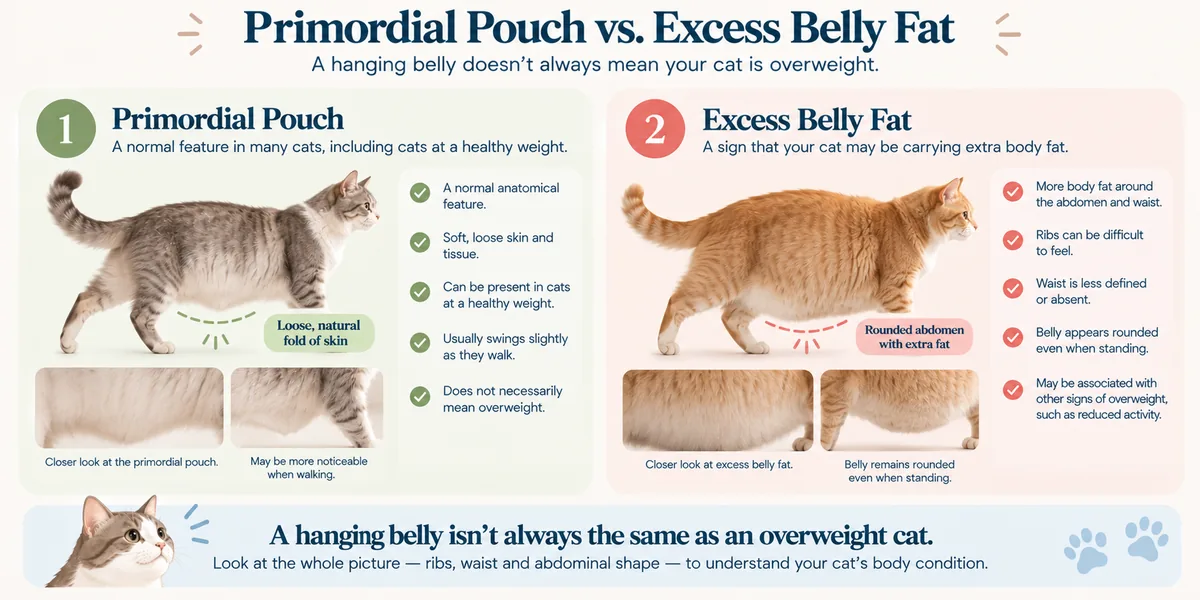
Have you ever noticed a loose flap of skin swinging beneath your cat’s belly as they walk?
That’s often the primordial pouch.
It is a normal anatomical feature found in many cats, including cats at a healthy body condition.
The pouch consists of loose skin and associated tissue along the lower abdomen. Its size and appearance vary between individuals.
A prominent pouch doesn’t necessarily mean your cat has too much body fat.
The important distinction is between loose, mobile abdominal tissue and more generalised fat accumulation across the body.
A cat can have a visible primordial pouch and still maintain an appropriate BCS.
A hanging belly isn’t always the same thing as an overweight belly.
Why Does Body Condition Matter More Than Appearance?
Excess body fat is more than a cosmetic concern.
Obesity can increase the risk of several health problems in cats, including diabetes mellitus, reduced mobility and certain joint-related difficulties.
Additional body weight can also make everyday activities, such as jumping, grooming and playing, more challenging.
However, being too thin can also be a concern.
Unexplained weight loss may be associated with inadequate nutrition, dental problems or underlying medical conditions.
The goal is not to make every cat look slim.
It’s to help each cat maintain an appropriate body condition for their individual needs.
Common Mistakes When Judging a Cat’s Weight
Mistake 1: Judging by Photographs
Camera angles, posture and thick fur can dramatically alter how large a cat appears.
A photograph can be useful for tracking changes over time, but it shouldn’t replace a hands-on assessment.
Mistake 2: Assuming a Hanging Belly Means Obesity
A primordial pouch is a normal feature in many cats.
It should be considered alongside rib coverage, waist shape and overall body condition.
Mistake 3: Comparing Cats by Weight Alone
A naturally large-framed cat may weigh more than a smaller cat while maintaining an appropriate body condition.
Weight becomes more meaningful when interpreted alongside body size and BCS.
Mistake 4: Assuming Indoor Cats Are Always Overweight
Indoor living can influence activity patterns, but it doesn’t automatically make a cat overweight.
Diet, calorie intake, physical activity, neuter status and individual metabolism all play a role.
Mistake 5: Starting a Diet Without Checking Body Condition
Reducing food simply because a cat looks round can be inappropriate, particularly if the appearance is mostly due to fur or natural anatomy.
Cats should never be placed on an aggressive weight-loss diet without veterinary guidance.
Rapid or prolonged inadequate food intake can increase the risk of serious health complications, including hepatic lipidosis.
How Can You Monitor Your Cat’s Body Condition Over Time?
A single observation tells you what your cat looks and feels like today.
Tracking changes over time can reveal patterns that are easier to miss in everyday life.
Try recording the following information:
- Body weight: Weight measured under similar conditions
- Rib coverage: Easy, difficult or unusually prominent to feel
- Waist: Visible, less defined or absent
- Abdominal shape: Changes in contour or fat accumulation
- Activity: Jumping, playing, climbing and grooming habits
- Food intake: Portion sizes, treats and changes in appetite
- Veterinary BCS: Most recent professional body condition assessment
Monthly checks can provide a useful starting point for many healthy adult cats.
If your cat is gaining or losing weight unexpectedly, or if its body condition appears to be changing, speak with your veterinarian.
What Should You Do If Your Cat Is Overweight?
If your cat is carrying excess body fat, the safest approach is a gradual, individualised weight-management plan.
A veterinarian can help assess your cat’s ideal body condition and recommend an appropriate calorie intake.
Depending on your cat’s needs, a plan may involve adjusting food portions, choosing a suitable diet, monitoring treats and encouraging regular play.
Weight loss should be gradual and monitored.
Never sharply reduce food intake or allow an overweight cat to stop eating for extended periods.
The aim is to reduce excess body fat while preserving muscle and maintaining adequate nutrition.
Final Thoughts
A fluffy cat isn’t necessarily overweight, and a slim-looking cat isn’t necessarily at an ideal body condition.
Fur, posture, body shape and natural abdominal anatomy can all influence appearance.
That’s why the most useful clues often come from what you can feel rather than what you can see.
By checking your cat’s ribs, waist and abdominal shape, and monitoring changes over time, you can build a more accurate picture of their body condition.
A healthy cat isn’t defined by how round or slim they look. It’s defined by whether their body condition supports their health and everyday life.
PAW PROMISE — A promise to every paw. Every day.
This article is for educational purposes and does not replace veterinary advice.