Why Do Senior Cats Lose Muscle Even When Their Weight Stays the Same?

Your senior cat weighs almost exactly the same as last year. Their appetite seems normal, and nothing about their daily routine has changed dramatically.
But when you stroke their back, their spine feels a little more noticeable. Their hind legs seem thinner, and they don’t jump onto the sofa quite as easily as they used to.
How can a cat lose muscle without losing weight?
The answer lies in something a bathroom scale cannot measure: body composition.
As cats grow older, the balance between muscle and fat can change. A cat may gradually lose muscle while maintaining or even gaining body fat, leaving their overall weight almost unchanged.
A stable weight doesn’t always mean a stable body.
What Happens to a Cat’s Muscles as They Age?
Muscle is living tissue that constantly undergoes repair and renewal.
Throughout a cat’s life, the body breaks down old muscle proteins and builds new ones. Maintaining healthy muscle depends on adequate nutrition, physical activity, hormonal regulation and overall health.
As cats age, several changes may affect this balance.
Some older cats become less active, reducing the stimulation that helps maintain muscle. Age-related changes in metabolism and the body’s response to nutrients may also influence muscle maintenance.
When muscle loss is associated with ageing, it is often described as sarcopenia.
However, not every older cat will experience the same degree of muscle loss, and noticeable muscle wasting should not automatically be dismissed as normal ageing.
Medical conditions, inadequate nutrition and reduced mobility can also contribute.
How Can a Cat Lose Muscle Without Losing Weight?
Imagine a cat weighing 5 kg.
Over time, the cat loses some muscle but gains a similar amount of fat.
The number on the scale may remain close to 5 kg, even though the cat’s body composition has changed.
This matters because muscle and fat perform very different functions.
Muscle supports movement, posture, strength and everyday activities. Fat provides energy storage and serves other physiological roles, but it cannot replace the functional benefits of muscle tissue.
A cat can therefore appear to maintain a healthy weight while becoming physically weaker.
This is why veterinarians assess more than body weight when evaluating a cat’s condition.
What’s the Difference Between BCS and MCS?
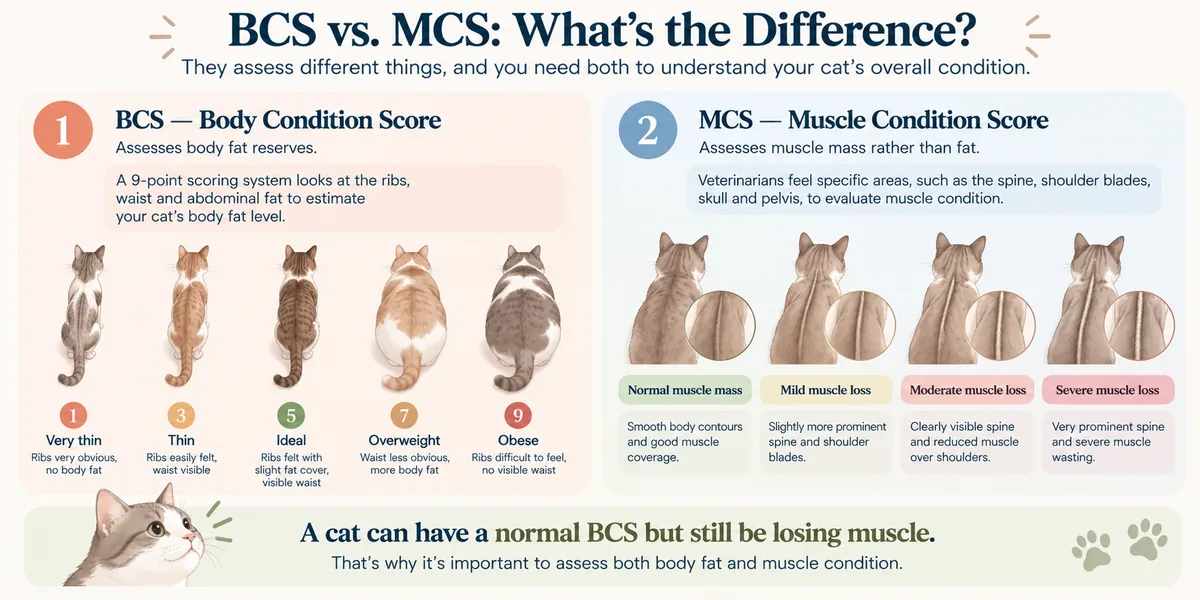
Two useful tools for evaluating a cat’s physical condition are Body Condition Score (BCS) and Muscle Condition Score (MCS).
They measure different things.
Body Condition Score (BCS)
BCS estimates a cat’s body fat reserves.
A commonly used nine-point scoring system considers features such as the ribs, waist and abdominal fat.
A score of 5/9 is generally considered ideal, although individual assessment remains important.
BCS helps identify whether a cat is underweight, at an appropriate body condition or carrying excess body fat.
Muscle Condition Score (MCS)
MCS evaluates muscle mass rather than fat.
Veterinarians assess muscle over areas such as the spine, shoulder blades, skull and pelvis.
Muscle condition is commonly classified as:
- Normal muscle mass
- Mild muscle loss
- Moderate muscle loss
- Severe muscle loss
A cat may have an apparently acceptable BCS while showing signs of muscle loss on MCS assessment.
BCS tells you about body fat. MCS tells you about muscle. You need both to understand the bigger picture.
Why Are Senior Cats More Vulnerable to Muscle Loss?
1. Reduced Physical Activity
Older cats may spend more time resting and less time climbing, jumping or playing.
When muscles are used less frequently, they may gradually become weaker.
But reduced activity isn’t always simply a consequence of age.
Joint discomfort, arthritis and other health problems can make movement painful, causing a cat to avoid activities they previously enjoyed.
2. Changes in Nutrition and Protein Utilisation
Protein supplies the amino acids needed to maintain and repair muscle tissue.
Some older cats may need particular attention to protein intake and protein quality to help maintain lean body mass.
However, nutritional requirements vary depending on health status.
For example, cats with certain medical conditions may need specially formulated diets.
This is why simply switching to a lower-protein senior food isn’t automatically the best choice for every ageing cat.
3. Chronic Health Conditions
Several diseases can contribute to muscle loss, including chronic kidney disease, hyperthyroidism, diabetes and other conditions affecting metabolism or nutrient intake.
In some cases, a cat may continue eating normally while losing muscle.
A noticeable change in muscle condition therefore deserves veterinary assessment, particularly when accompanied by changes in appetite, thirst, behaviour or activity.
4. Changes in Mobility
Muscle strength and movement influence one another.
A cat that becomes less mobile may lose muscle through reduced use. As muscle strength declines, movement may become even more difficult.
This can create a cycle in which inactivity and muscle loss reinforce each other.
Recognising mobility changes early may help prevent further decline.
What Are the Early Signs of Muscle Loss?
Muscle loss can be subtle, especially in cats with long or thick fur.
Rather than relying only on appearance, pay attention to how your cat feels and moves.
Possible changes include:
- A more noticeable spine: The bones along the back feel more prominent than before.
- Thinner hind legs: The muscles around the thighs appear less developed.
- More prominent shoulder blades: The upper body feels less muscular.
- Difficulty jumping: Your cat hesitates before jumping or chooses lower surfaces.
- Reduced activity: They play, climb or explore less frequently.
- Changes in posture or strength: Movements appear less confident or controlled.
These observations don’t confirm muscle loss on their own, but they can help identify changes worth discussing with a veterinarian.
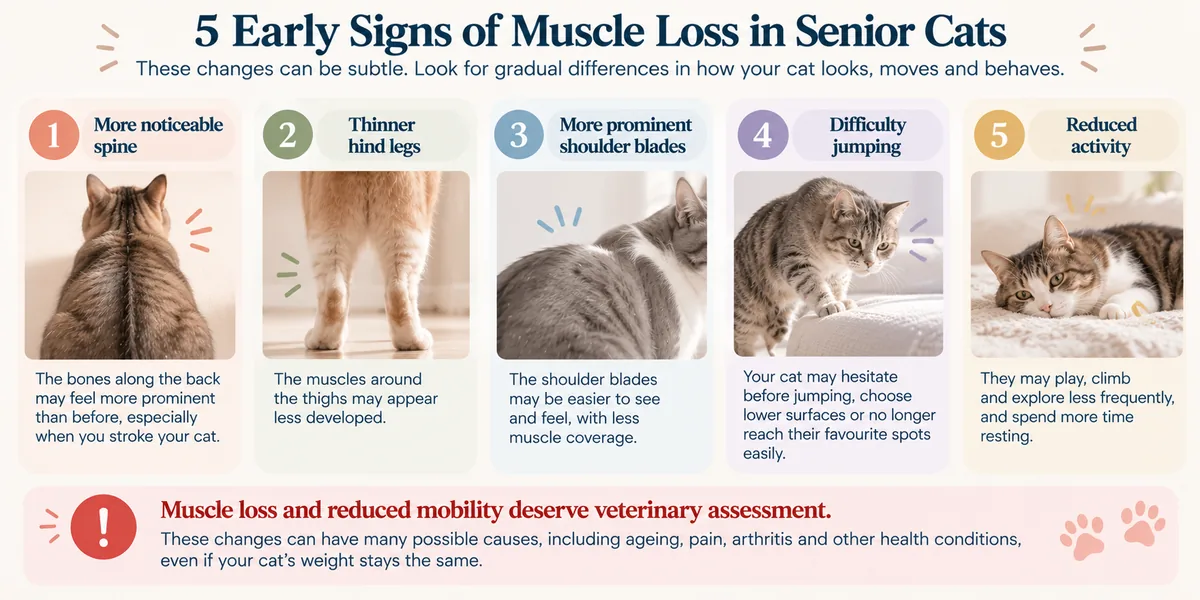
Importantly, difficulty jumping may also indicate pain or joint disease, even when obvious muscle loss is absent.
Can You Prevent Muscle Loss in Senior Cats?
Provide Appropriate Nutrition
Choose a complete and balanced diet suitable for your cat’s individual needs.
Adequate energy intake, high-quality protein and essential nutrients are important for maintaining muscle.
Avoid restricting calories or protein without a clear reason, particularly in an older cat already showing signs of muscle loss.
If your cat has a diagnosed medical condition, ask your veterinarian whether a specialised diet is appropriate.
Encourage Comfortable Movement
Regular, gentle activity can help maintain mobility and muscle function.
Short play sessions, accessible climbing surfaces and activities suited to your cat’s physical abilities may encourage movement.
If your cat seems uncomfortable jumping, consider providing steps or ramps rather than forcing them to exercise.
Address Pain and Health Problems
If an older cat becomes less active, investigate the reason.
Pain, arthritis, dental disease and other medical problems can affect eating habits, movement and overall condition.
Treating an underlying problem may help your cat remain more comfortable and active.
Monitor Changes Over Time
A single measurement provides only a snapshot.
Regular observations of weight, muscle condition, appetite and mobility can help reveal gradual changes that might otherwise go unnoticed.
How Can You Track Your Senior Cat’s Body Condition at Home?
You don’t need specialist equipment to begin noticing changes.
A simple monthly record can help you compare your cat’s current condition with their usual baseline.
- Body weight: Gradual increases or decreases
- Spine and shoulders: Bones becoming more prominent
- Hind legs: Changes in muscle fullness
- Jumping ability: Hesitation, lower jumps or avoiding favourite places
- Activity level: Changes in play, climbing and daily movement
- Appetite: Eating more or less than usual
- Other changes: Increased thirst, vomiting, discomfort or behavioural changes
Try to assess your cat under similar conditions each time.
Photographs taken from the side and above may also help you notice changes in body shape.
However, home observations cannot replace a professional muscle condition assessment. Thick fur, excess body fat and normal anatomical differences can make changes difficult to interpret.
If you notice progressive muscle loss or reduced mobility, arrange a veterinary appointment rather than waiting for a significant change in weight.
When Should You Contact a Veterinarian?
Book a veterinary assessment if your senior cat develops noticeable muscle loss, becomes less active or begins struggling with movements they previously managed comfortably.
Seek prompt veterinary advice if muscle loss occurs alongside unexplained weight loss, increased thirst, vomiting, reduced appetite or weakness.
A veterinarian can assess body and muscle condition, investigate possible medical causes and recommend an appropriate nutrition and care plan.
Regular senior health assessments are particularly valuable because some age-related diseases develop gradually, before obvious symptoms appear.
Final Thoughts
A senior cat can maintain the same weight while their body changes in important ways.
Muscle loss may be hidden beneath a familiar number on the scale, especially when body fat increases at the same time.
That’s why weight alone cannot tell the whole story.
By paying attention to muscle condition, mobility, nutrition and everyday behaviour, you can recognise changes that might otherwise be overlooked.
Healthy ageing isn’t just about maintaining weight. It’s about maintaining the strength and comfort that help your cat enjoy everyday life.
PAW PROMISE — A promise to every paw. Every day.
This article is for educational purposes and does not replace veterinary advice.