Do Senior Cats Need Senior Cat Food? Here’s What Veterinarians Want You to Know
Once cats reach seven or eight years of age, many owners begin asking an important question:
“Does my cat need to switch to a senior diet?”
With so many products marketed specifically for older cats, it’s easy to assume that every senior cat should automatically eat “Senior” food.
However, the answer is not quite that simple.
Senior Food Is an Option—Not a Requirement
From a veterinary nutrition perspective, there is no rule stating that every older cat must eat a senior formula.
What matters most is not the word “Senior” on the packaging, but whether the diet meets your cat’s current nutritional and health needs.
Some 13- or 14-year-old cats remain active and healthy, while certain eight-year-old cats may already have medical conditions that require specialized nutrition.
Age alone should never be the only factor when choosing a diet.
How Is Senior Cat Food Different?
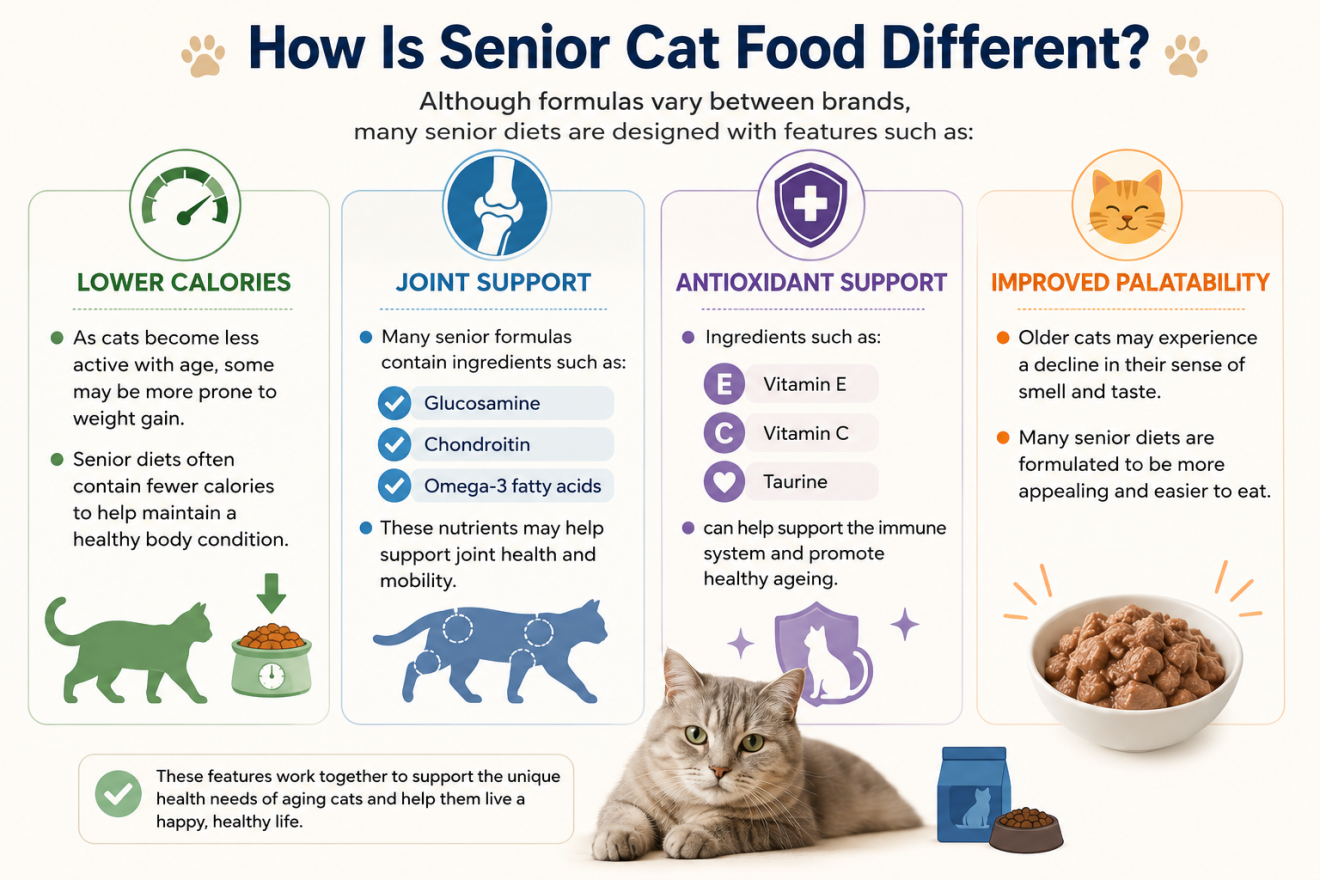
Although formulas vary between brands, many senior diets are designed with features such as:
Lower Calories
As cats become less active with age, some may be more prone to weight gain. Senior diets often contain fewer calories to help maintain a healthy body condition.
Joint Support
Many senior formulas contain ingredients such as:
- Glucosamine
- Chondroitin
- Omega-3 fatty acids
These nutrients may help support joint health and mobility.
Antioxidant Support
Ingredients such as:
- Vitamin E
- Vitamin C
- Taurine
can help support the immune system and promote healthy ageing.
Improved Palatability
Older cats may experience a decline in their sense of smell and taste. Many senior diets are formulated to be more appealing and easier to eat.
Not Every Senior Cat Benefits From Senior Food
In fact, some senior cats may do better on other diets.
Cats That Are Losing Weight
Some senior formulas are lower in calories and fat to help prevent obesity. However, thin cats or those experiencing muscle loss may actually require more calories rather than fewer.
Cats With Poor Appetite
If a cat is already eating less, switching to a lower-calorie formula may contribute to further weight loss.
Cats With Chronic Diseases
Health conditions often matter more than age itself. Cats with:
- Chronic kidney disease (CKD)
- Diabetes mellitus
- Food allergies
- Heart disease
- Urinary tract disorders
- Gastrointestinal disease
may require therapeutic or prescription diets specifically designed for their condition rather than a standard senior formula.
When Might Senior Food Be Appropriate?
Senior diets may be beneficial for cats that:
✔ Are over 10–12 years of age
✔ Have reduced activity levels
✔ Show signs of joint stiffness
✔ Tend to gain weight easily
✔ Have decreased appetite
✔ May benefit from additional antioxidant and joint support
Ultimately, the decision should be based on your cat’s individual needs rather than age alone.
Final Thoughts
Senior cat food is not a requirement for every older cat.
Some cats thrive on senior diets, while others may do better on regular adult food or require prescription diets tailored to kidney disease, diabetes, gastrointestinal issues, or other medical conditions.
Rather than asking:
“At what age should my cat switch to senior food?”
A better question is:
“Is my cat’s current diet meeting their individual health needs?”
Because for senior cats, the best diet is not necessarily the one labeled “Senior”—it’s the one that supports their health, body condition, and quality of life.